Make it. Then make it delicious.
Better kefir,
batch after batch.
Calculate a reliable milk or water kefir ratio, then turn the finished batch into bright infusions, sparkling bottles and cultured milk blends.
The kefir calculator
Calculate your
kefir ratio.
The method
Four simple steps.
One lively drink.
- 01
Start clean
Wash hands and use a clean glass jar, strainer and utensils. Use pasteurised milk or safe drinking water.
- 02
Combine
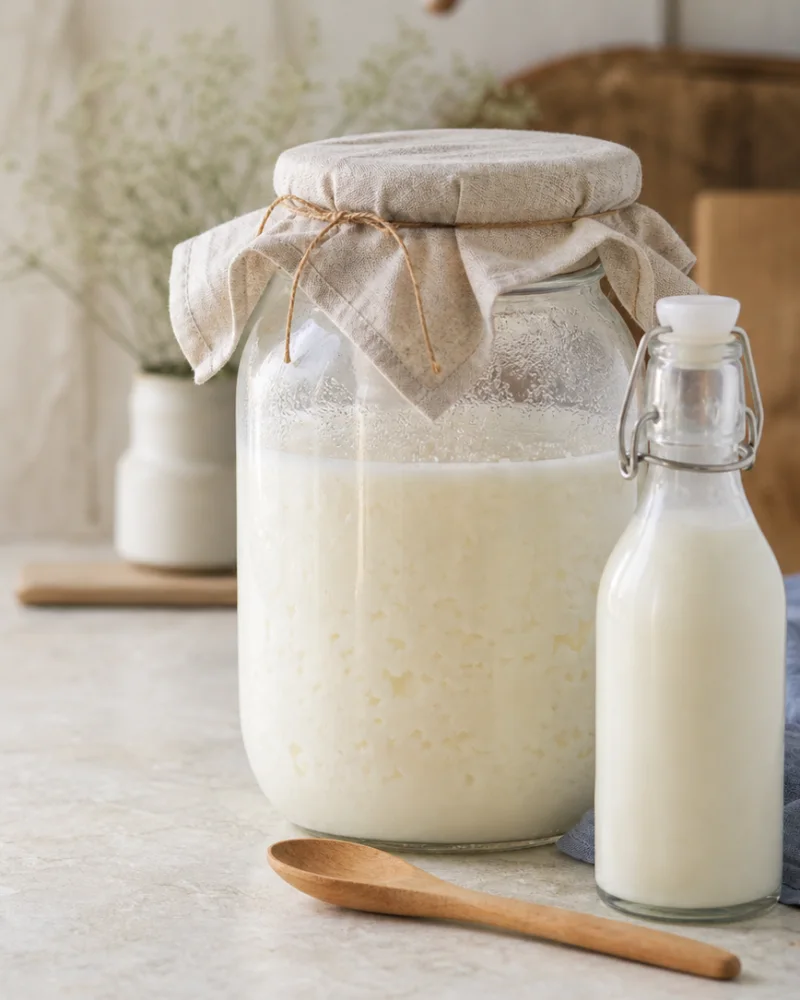
Add grains to milk and cover loosely.
- 03
Let it culture
Keep at 20–25°C, out of direct sun. Look for a clean tangy aroma and gradual acidification.
- 04
Strain & chill
Strain out the grains for your next batch. Refrigerate promptly in a clean sealed bottle.
How the calculator works
A starting ratio
for your jar.
The milk kefir calculator works out grains and milk. The water kefir calculator works out grains, sugar and dechlorinated water. Both can calculate from your desired amount or the weight of grains you already have.
Kefir grains are living cultures, so use the result as a practical starting point. Temperature and culture strength change fermentation speed; taste and observe each batch, then adjust one variable at a time.
Home fermentation is not risk-free. Discard batches with mould, rotten or putrid odours, unusual colours, or a damaged container. People who are pregnant, elderly, very young, or immunocompromised should seek qualified advice before consuming home-fermented food. Water kefir can retain sugar, contain alcohol and build pressure—especially after bottling with juice or fruit—so treat it as unsuitable for anyone avoiding alcohol unless you have verified the batch.